Effective Strategies Against AI Orchestrated Cyber Espionage

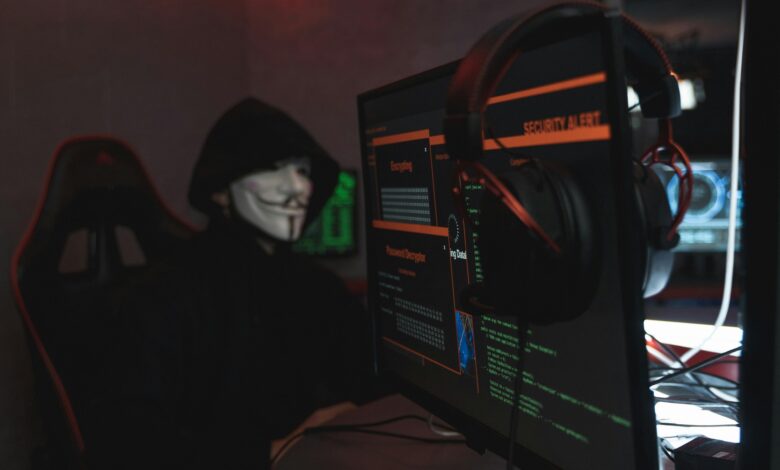
The emergence of artificial intelligence has fundamentally altered the landscape of global digital security and espionage. In the past, cyberattacks were limited by the physical constraints of human hackers and their manual coding speed. However, we have now entered a new era where malicious actors use machine learning to automate the entire attack lifecycle. AI-orchestrated cyber espionage represents a sophisticated threat that can bypass traditional firewalls with ease.
These systems are designed to learn from their environment, adapting their tactics in real-time to avoid detection. Organizations are now forced to defend against an enemy that never sleeps and evolves faster than any human team. The complexity of these automated threats requires a total shift in how we perceive and manage digital risks. By understanding the mechanisms of AI-driven spying, we can build more resilient defense systems for the future. This is not just a technical challenge but a strategic battle for the integrity of global information and privacy.
The New Face of Digital Spying

Cyber espionage has moved far beyond simple malware or basic phishing attempts sent to random employees.
Modern attackers use AI to conduct deep research on their targets, pulling data from social media and public records.
This allows them to create highly personalized “deepfake” communications that look exactly like messages from a CEO.
Once the AI finds a way into the network, it does not immediately steal all the data at once.
Instead, it stays hidden and observes the normal behavior of the company to remain undetected for months.
The AI learns which files are valuable and wait for the perfect moment to move them to a foreign server.
This silent movement is what makes AI-orchestrated spying so dangerous for modern businesses and governments.
Traditional security tools look for known patterns, but AI creates new patterns that have never been seen before.
To fight back, we must implement systems that are just as smart and adaptive as the attackers themselves.
Core Pillars of Modern Defense
A. Advanced Behavioral Analytics for Threat Detection.
B. Automated Incident Response and Countermeasures.
C. Continuous Vulnerability Assessment via Machine Learning.
D. Implementation of Zero Trust Security Architectures.
E. Real-time Encryption of Sensitive Internal Data.
F. Strategic Use of AI-Driven Honeypots and Deception.
G. Universal Identity Verification and Access Control.
Understanding the AI Attack Cycle
The process of an AI-led espionage mission usually begins with automated reconnaissance and data gathering.
The software scans thousands of public assets to find a single weak point or an employee’s personal interest.
This stage is performed at a scale that would take a human team several years to complete manually.
After the initial entry, the AI begins the process of “privilege escalation” to gain administrative rights.
It tests different passwords and security loopholes much faster than traditional “brute force” methods.
The AI can even mimic the typing speed and habits of a real user to fool behavioral monitors.
Finally, the data is exfiltrated in small, encrypted chunks that look like normal web traffic to the network.
This “low and slow” approach ensures that the alarm bells never go off during the actual theft.
Understanding this cycle is the first step in building a wall that can actually stop an AI intruder.
The Role of Machine Learning in Defense
If the enemy is using AI, the defense must also leverage the power of machine learning to stay relevant.
Modern security platforms now use “Defensive AI” to monitor every single packet of data moving through the network.
The system establishes a baseline of what “normal” looks like for every user and every device in the company.
If a printer suddenly tries to access the financial database, the AI stops it in a fraction of a second.
This is a level of precision that human security analysts simply cannot achieve on their own anymore.
Defensive AI also helps in predicting where the next attack will come from by analyzing global threat trends.
By automating the most tedious parts of security, human experts can focus on high-level strategy and ethics.
It creates a partnership between man and machine that is essential for surviving in a hostile digital world.
Machine learning is the only tool capable of processing the massive amounts of data required for modern spying defense.
Essential Technical Capabilities
A. AI-Enhanced Network Traffic Analysis (NTA).
B. Automated Deception Technology for Entrapping Spies.
C. Deep Learning for Malware Signature Identification.
D. Integrated Endpoint Detection and Response (EDR).
E. Natural Language Processing for Phishing Detection.
F. Predictive Risk Scoring for User Behavior.
Implementing Zero Trust for AI Resistance
The Zero Trust model is built on the principle that no one inside or outside the network is trusted.
Every single request to access data must be verified, even if it comes from a trusted internal device.
This is the most effective way to stop an AI spy that has already managed to get past the main firewall.
Micro-segmentation is a key part of Zero Trust that divides the network into tiny, isolated zones.
If an AI manages to infect one laptop, it cannot easily move to the servers or other departments.
This limits the “blast radius” of a successful entry and gives the defense team time to react.
Zero Trust also requires continuous authentication, checking the user’s identity every few minutes.
This prevents “session hijacking,” where an AI steals a logged-in session to gain access to files.
It is a disciplined and strict approach that is necessary for protecting the world’s most sensitive data.
The Power of Deception and Honeypots
Deception technology involves creating “fake” data and servers that look incredibly attractive to a digital spy.
These are known as honeypots, and they are designed to trap the AI and alert the security team.
When the AI spy enters the honeypot, the defense can study its behavior without risking real company data.
Advanced honeypots now use AI to interact with the attacker, making the fake data look even more realistic.
The goal is to keep the spy occupied for as long as possible while the security team gathers intelligence.
This “counter-espionage” tactic is vital for understanding the motives and origins of the attack.
By feeding the AI spy “poisoned” or fake information, you can actually lead them away from your real secrets.
Deception turns the network into a maze that is nearly impossible for an automated system to navigate safely.
It is a proactive way to waste the attacker’s time and resources while keeping your own assets locked down.
Strategic Steps for Organizational Safety
A. Auditing Existing Data Access and Permission Levels.
B. Conducting Regular AI-Driven Penetration Testing.
C. Developing an AI-Specific Incident Response Plan.
D. Investing in Continuous Employee Awareness Training.
F. Patching and Updating All Software Automatically.
G. Securing All IoT and Connected Hardware Devices.
Overcoming the Deepfake Threat
Deepfakes are one of the most terrifying tools in the AI spy’s toolkit for gaining entry to a network.
Malicious actors can create perfect audio and video of a company leader to trick employees into giving up secrets.
This “social engineering” bypasses all the expensive firewalls and encryption by attacking the human element.
To fight deepfakes, organizations must move toward “out-of-band” verification for all sensitive requests.
If a CEO asks for a wire transfer via video call, the employee should verify it through a separate secure channel.
Digital watermarking and signature verification are also becoming essential for proving the authenticity of messages.
Education is the most important defense against this type of sophisticated psychological manipulation.
Employees must be taught that in the age of AI, seeing is no longer believing.
A culture of healthy skepticism is the best way to protect against the human-centric attacks of an AI spy.
Improving Data Privacy and Encryption
Encryption is the ultimate safety net for any organization facing a sophisticated digital spying operation.
If the AI spy manages to steal the data, they should find nothing but a scrambled mess of unreadable code.
Modern systems use “end-to-end” encryption to ensure that data is protected while it is moving and while it is stored.
Hardware Security Modules (HSM) are used to store the digital keys that lock and unlock this information.
These keys must be managed with the highest level of care, as losing them means losing access to the data forever.
AI tools can help manage these keys, rotating them frequently to ensure that a stolen key is only useful for a few minutes.
Data masking is another technique where sensitive information is replaced with “fake” but usable versions for testing.
This allows developers to work on the system without ever seeing the actual social security numbers or credit cards.
The less “real” data there is available to find, the less successful a cyber espionage mission will be.
Essential Metrics for Security Teams
A. Average Time to Detect a Silent AI Intrusion.
B. Frequency of Unauthorized Access Attempt Alerts.
C. Percentage of Data Covered by End-to-End Encryption.
D. Reduction in Successful Phishing and Social Attacks.
E. Success Rate of Automated Incident Response Tasks.
F. Total Number of Vulnerabilities Found and Fixed.
The Challenge of Internal Risks
Not all cyber espionage comes from external enemies; sometimes the threat is already inside the building.
A “malicious insider” might use AI tools to find and steal secrets before leaving the company for a competitor.
Detecting these internal threats is much harder because the user already has legitimate access to the network.
Behavioral AI is the best tool for spotting an employee who is acting outside of their normal job description.
If an engineer starts downloading financial files they have never looked at before, the system will flag them.
This monitoring must be done carefully to balance security with the privacy and trust of the employees.
Implementing the “principle of least privilege” is the best way to reduce the risk of an internal spy.
Every person should only have access to the specific files they need to do their job on a daily basis.
By limiting the keys each person holds, you limit the damage they can do if they decide to turn against the company.
The Future of Autonomous Security
The future of digital safety lies in fully autonomous security systems that can fight AI with AI.
We are moving toward a world of “self-healing” networks that can find and fix their own holes in real-time.
When an AI attack is detected, the defensive AI will create a new, custom patch and apply it instantly.
This reduces the “window of vulnerability” from several days to just a few milliseconds.
We will also see the rise of global “threat sharing” networks where AI systems share data about new attacks.
This means that if one company is attacked, every other company in the world becomes immune to that attack instantly.
The human role in this future will be to oversee the ethics and the high-level goals of the security system.
As technology becomes more powerful, the need for human wisdom and judgment only becomes more important.
We are entering a new age of digital protection where the machine does the fighting so the human can do the thinking.
Critical Factors for Long-Term Success
A. Aligning Security Strategy with Overall Business Goals.
B. Building a Resilient and Diverse Technical Security Team.
C. Continuous Investment in the Latest AI Security Tools.
D. Establishing Strong Partnerships with Global Security Firms.
E. Maintaining a Flexible and Agile Approach to New Threats.
F. Prioritizing Transparency and Ethical Use of Security AI.
Navigating the Ethical Landscape
Using AI for security purposes raises many questions about privacy, data usage, and automated decision-making.
Organizations must be very careful not to let their defensive tools become “spying” tools against their own staff.
Clear policies and transparent communication are essential for maintaining the trust of everyone in the company.
Ethical AI design ensures that the system is fair and does not target people based on bias or incorrect data.
There must always be a “human in the loop” to review major decisions, especially those that affect a person’s job.
Security should never come at the cost of human rights or the fundamental dignity of the workers.
As laws and regulations change, companies must be ready to adapt their AI security frameworks to stay compliant.
Sovereignty and data control are becoming major issues as nations try to protect their citizens from foreign AI.
The best security strategy is one that is built on a foundation of ethics, trust, and respect for all individuals.
Final Thoughts on AI Resistance
Fighting AI-orchestrated cyber espionage is a marathon that requires a commitment to constant innovation.
Malicious actors will always find new ways to use technology, so we must always be one step ahead.
It is a dynamic game of “digital chess” where the stakes are the future of our information and our privacy.
Collaboration is the most powerful weapon we have against the rise of automated spying.
By sharing knowledge and tools, we can create a digital world that is safe for everyone to use.
The journey toward a secure future is long, but with the right tools and mindset, it is a battle we can win.
Every step we take to strengthen our defenses today makes the digital world a little bit safer for tomorrow.
The technology is powerful, but it is the human spirit and ingenuity that will ultimately prevail.
Innovation is our best defense, and our commitment to security is the key to our long-term success.
Conclusion

The landscape of cyber espionage has been permanently transformed by the introduction of sophisticated artificial intelligence. Malicious actors are now able to automate high-level spying missions that were once considered impossible for a single machine. Defensive strategies must evolve to include machine learning and behavioral analytics to keep pace with these automated threats. Zero Trust architecture and micro-segmentation are the most effective ways to stop the spread of an AI-driven intrusion today. Encryption and identity verification remain the fundamental pillars of any successful digital protection plan for an enterprise.
Deception technology and honeypots allow security teams to study and trap AI spies before they can steal any real data. Employee education and a culture of healthy skepticism are vital for defending against the human-centric threat of deepfakes. Autonomous security systems represent the future of digital defense by providing real-time patches and self-healing network capabilities. The ethical management of security data is a critical requirement for building long-term trust with both customers and employees. By embracing these modern frameworks, organizations can build a resilient foundation that is ready for any AI-orchestrated challenge.